
Is a USDA Home Loan Your Ideal Option?
Published: October 31, 2024 | 6 min read
Is a USDA Home Loan Your Ideal Option?
Have you always wanted to buy your dream house but are concerned about money? The USDA home loans program could be the solution. That’s why, for many people, these loans offer a great opportunity to buy their own home. The U.S. Department of Agriculture endorses them.
This article will cover USDA loan requirements along with other conditions. Below, we will help you understand the USDA home loan mortgage so you can decide if it is the right choice for your situation.
What Are USDA Home Loans?
USDA home loans are unique because they have extremely advantageous features. They help to make home purchases possible for families with low to moderate income. The U.S. Department of Agriculture funds the loans, keeping rates fixed over time and eliminating down payments. Therefore, USDA home loans typically offer better rates than other residential mortgage financing. They offer lower interest rates and no down payment. This opens a path for home ownership to many folks who otherwise might not have had it.
As mentioned, USDA loan requirements differ from other mortgage types, so you can expect different terms when compared to conventional loans. They target rural and suburban areas. This is to enable development in those regions. For those who qualify, they are a great choice.
Benefits of USDA Home Loans:
-
Zero Down Payments: With USDA home loans, there is no need for a minimum down payment. This is a great opportunity for all first-time homebuyers.
-
Low Interest Rates: USDA loans typically offer lower interest rates than other loan options. This can save you money over the life of your loan.
-
Flexible credit: Many of the USDA loan requirements can be flexible. Borrowers with credit scores as low as 640 may still qualify.
-
Reduced Mortgage Insurance: USDA loans have lower mortgage insurance premiums. This can ultimately lead to more affordable monthly repayments.
-
Closing Cost Assistance: Certain USDA home loans assist with closing costs. Additionally, this process also lowers the initial costs of buying a home.
USDA Loan Requirements:
To qualify for a USDA home loan, you will have to meet certain criteria:
-
Income Limits: USDA loans are designed for families with financial need. To qualify, the household's adjusted gross income must not exceed 115% of the area's median income. Additionally, you need to prove that your income is steady and that, considering your assets, savings, and income, you can comfortably make your mortgage payments for at least the first year.
-
Location: The home must be situated in one of the eligible locations. For more details, please refer to the USDA home loan eligibility maps.
-
Principal Use: It needs to be your primary residence. This means you must stay inside that home permanently.
-
U.S. Citizenship: You must be a U.S. citizen, non-citizen national, or a permanent resident to apply for this loan.
-
Credit score: Most lenders prefer a credit score of 640 or higher, but this threshold can vary. Lower scores may still qualify, depending on the lender’s criteria.
-
Debt-to-Income Ratio: To give yourself the best chance of qualifying, aim to have a DTI of 43% or lower.
-
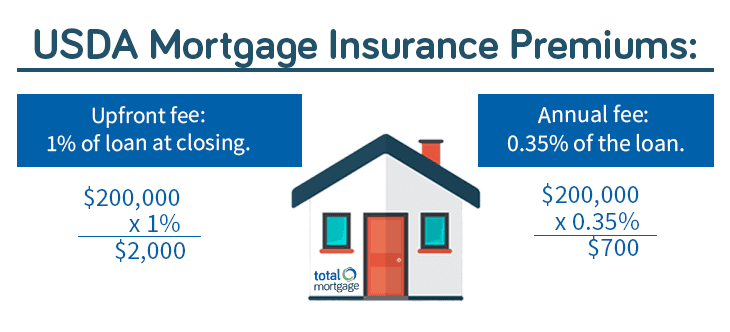
Guarantee Fees: USDA loans come with both upfront and annual guarantee fees, which function similarly to mortgage insurance and are used to support the USDA loan program. The upfront fee is 3.5% of the total loan amount and is typically due at closing. However, some lenders may allow this fee to be rolled into your mortgage. The annual fee, set at 0.5% of the loan’s value, is spread over the life of the loan and added to your monthly payment in equal installments.
-
USDA Appraisals: A USDA loan requires a property appraisal conducted by a USDA-approved appraiser. This appraisal determines the home's market value to ensure the buyer is not overpaying for the property.
The appraisal also checks that the property meets USDA standards, ensuring it is safe and habitable. Key home systems, like electrical and heating, must be operational and comply with local codes, and the property should not have issues such as broken windows. The appraiser will also look for signs of insect damage and will assess whether the well or septic system, if present, meets USDA requirements. Keep in mind that an appraisal is not a comprehensive inspection; to get a detailed understanding of the home's condition, hiring a professional home inspector is recommended.
Types of USDA Home Loans:
USDA Home Loan Program includes three main types of loans that include:
-
USDA Guaranteed Loan: These loans are funded by private lenders but backed by the USDA, making them less risky for the lender. They are designed for moderate- to low-income applicants. Benefits include low interest rates and the possibility of zero down payment.
-
USDA Direct Loan: Issued directly by the USDA, these loans are reserved for low-income borrowers who may not qualify for other types of financing. They offer highly favorable terms, including interest rates as low as 1%.
-
USDA Home Improvement Loans: These loans and grants are available to qualified rural homeowners to make necessary home repairs or improvements. They can be provided directly by the USDA or guaranteed through private lenders.
Different USDA home loans have different requirements. Depending on your income and location, you will need to determine the best loan type for yourself.
USDA Loans vs. Other Mortgages
If you're unsure whether a USDA loan suits your needs, consider other mortgage options.
USDA Loan Vs. Conventional Loan
Both USDA and conventional loans are available in rural areas. With a conventional loan, you can qualify with as little as 3% down. However, if you put down at least 20%, you can avoid private mortgage insurance (PMI). PMI is usually added to your monthly payment until you reach 20% equity.
USDA Loan Vs. FHA Loan
USDA loans are only for rural areas, but FHA loans can be used anywhere. FHA loans require a minimum down payment of 3.5% with a credit score of 580 or higher. When you take out an FHA loan, you'll pay an upfront mortgage insurance premium (UFMIP) of 1.75% of the loan amount. There’s also an annual mortgage insurance premium (MIP) ranging from 0.55% to 0.85%, depending on the loan term and amount.
USDA Loan Vs. VA Loan
VA loans, backed by the Department of Veterans Affairs, are available to qualifying service members, veterans, and their families. These loans offer zero down payment. There is no annual fee, but you will need to pay an upfront funding fee, which ranges from 1.25% to 3.3% of the loan amount.
Turn Your Dream of Buying a Home Into a Reality with USDA Home Loans
USDA loans can help make buying a home in eligible rural areas more affordable by offering lower interest rates and no down payment. Although you'll still have to cover closing costs, skipping the down payment can ease the financial burden. You can use the USDA’s online eligibility map to see if a property qualifies.
While Total Mortgage doesn’t provide USDA loans, we can assist you in finding the best financing options for your new home.
Reach out now!
Get Pre-Qualified in 60 Seconds!
Find out what you can afford with no hard credit check, just a few simple questions.
Select the type of loan that best fits you