

A Beginner's Guide to House Styles
Published: February 20, 2015 | 5 min read
When you’re first starting your home search, it really helps to have a feel for exactly what you’re looking for. Some people make the mistake of just handing their realtor a list of requirements. However, 3 bedrooms, 2 baths is going to look (and feel) very different in a ranch than it will in a Victorian.
To give you an idea, here are some of the most popular architectural styles used in the United States.
Colonial
This style originated (surprise) in the 1600’s with American colonists. It typically has two stories, dormers, and a very symmetrical, rectangular shape, both inside and out.
Dutch colonials are one of many common variations, and they have similar features, but with a barn-like roof.
Split Level
In a split-level, three floors are staggered, so that the main living floor with the kitchen and living room sits about halfway between bedrooms on the third floor and the basement. They were very popular in the 50’s and 60’s and remain so today.
Victorian (or Queen Anne)
It’s difficult to not recognize a Victorian when you see one, especially if you live in a town with a historic district—they were very popular from the late 1800’s into the 20th century.
Outside, they often have sprawling porches, bay windows, towers, and complex, colorful paint jobs. Inside, expect a fairly traditional floorplan, with the bedrooms on the second floor and a kitchen at the back of the house.
Bungalow
Bungalows are often smaller houses, with the majority of their living space located on the first floor and a small “half-story” thanks to dormers. In many neighborhoods, they’re built close together with large front porches.
Depending on your location, you may see bungalows described as “Craftsman” in your search. For that, you can thank the Arts and Crafts Movement, which emphasized natural building materials.
Ranch
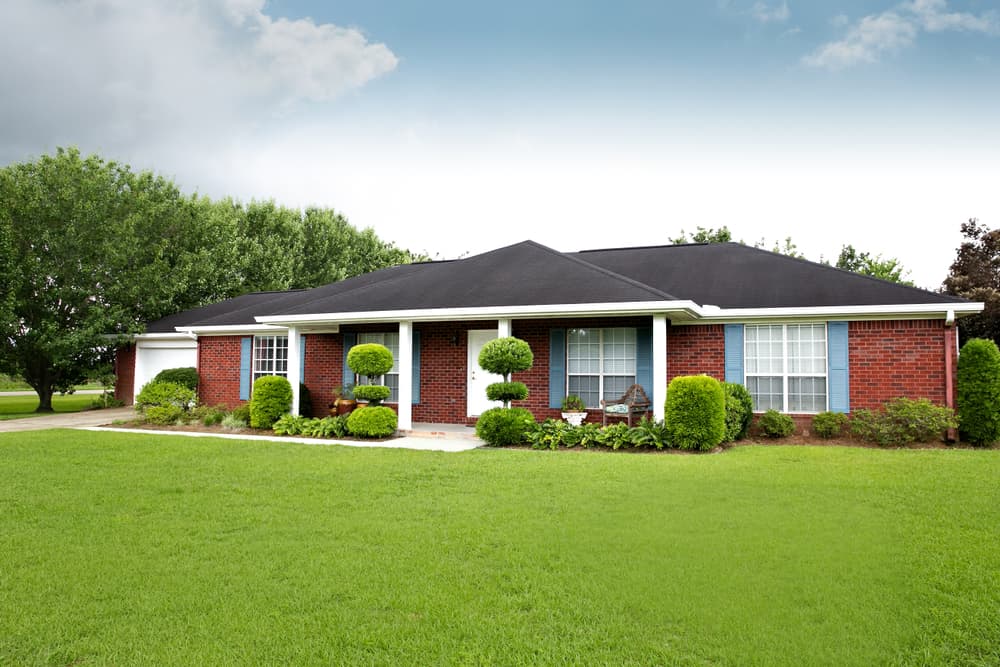
Nowadays, “ranch” is used to describe pretty much any single story house with a low-pitched roof. They were very popular after WWII and into the 50’s and 60’s and are usually rectangular or L-shaped with a simple, open floor plan and a full or partial basement.
A raised ranch usually has a similar open floor plan, but occupies two levels.
Get Pre-Qualified in 60 Seconds!
Find out what you can afford with no hard credit check, just a few simple questions.
Select the type of loan that best fits you